
Your Local Mortgage Lender
Helping Clients All Throughout California
Personalized Mortgage Experience
JR Younathan offers personalized service and loan options you'll love. We shop multiple lenders to find the best rate and product for you, getting you into your dream home faster.
With wholesale interest rates and cutting-edge technology, we make the mortgage process seamless. Trust the experts who focus solely on mortgages. Support your local community and experience elite client service.
Let us help you achieve your homeownership dreams!
The Home Loan Process
Mortgage Pre-Approval
Get pre-approved from one of our Loan Officers to see how much you can afford.
House Shopping
Work with a trusted Real Estate Agent to find a home you would like to move into.
Loan Application
Complete your home loan application to get the lending process started.
Don't take my word for it
Mortgage Programs
Experience the best mortgage experience located in Ontario, California.
Home Loan Options
Our experienced mortgage advisors will walk you through the best mortgage loan program that will fit your specific scenario.
Conventional Home Loans.
FHA Home Loans.
USDA Home Loans.
VA Home Loans.
DSCR Loans.
Constructions Loans.
Frequently Asked Questions
How often can I refinance my mortgage?
There is no limit to the number of times you can refinance. However, you must qualify every time you apply and there will be costs associated with closing the loan each time.
Can I buy a home if I do not have money for a down payment?
Yes! There are a number of bond programs that offer low or no down payment financing options.
How do I know which mortgage is right for me?
The key to choosing the right mortgage is to understand the range of options and features available to you, as well as your budget, circumstances, and goals. Our licensed mortgage professionals are here to help you navigate that process. The more you know, the more comfortable and confident you will be choosing the best option for you and your family.
How long will the loan process take?
The Truth in Lending Act (TILA) does not permit a lender to close a loan until at least seven (7) business days have passed from the date your application was received. A typical home loan takes 30 days, as a number of third-party services such as appraisals, title work, and credit are required in conjunction with the mortgage process. Once you familiarize your Loan Officer with the details of your specific loan scenario, they will be able to provide you with a more specific timeline.
Will I qualify for a home loan?
The only way to find out is to speak with a qualified mortgage professional. Our Loan Officers have helped numerous clients who didn’t know if they could qualify to become home owners. We take the time to understand your financial situation and long-term financial goals, and then match you with the loan program that best fits your needs. Your approval for a loan may also largely depend on the price of the home you are financing. Getting pre-qualified prior to beginning your home search can give you an idea of what you may be able to afford.
Why do people refinance their mortgages?
Homeowners typically refinance to save money, either by obtaining a lower interest rate or by reducing the term of their loan. Refinancing is also a way to convert an adjustable loan to a fixed loan or to consolidate debts.
How much money will I have to pay upfront to buy a home?
This question does not have a simple, one-size-fits-all answer. The exact amount will depend on the price of the home you buy as well the type of mortgage financing you choose. Depending on your loan program, your down payment could be as much as 20% of the home’s price or as little as 3%, while some loans require no down payment at all.
Can I get a mortgage after bankruptcy?
You may still qualify for a home loan even if you have experienced a bankruptcy. The best way to find out if you qualify is to talk with a Loan Officer to discuss your options. Be sure to bring all paperwork regarding your bankruptcy so your Loan Officer can find the program that best fits your situation.
Should I lock my interest rate now, or wait until we are closer to our closing?
Interest rates fluctuate all day, every day. If an interest rate is good, it may be in your best interest to lock now. If you wait, you run the risk of an increase in rates later. If you are concerned that rates may go down after you lock, contact your Loan Officer to discuss your options. Some programs allow you to lock for an extended period and choose to lower your rate should a better one become available.
Most Recent Blog Updates
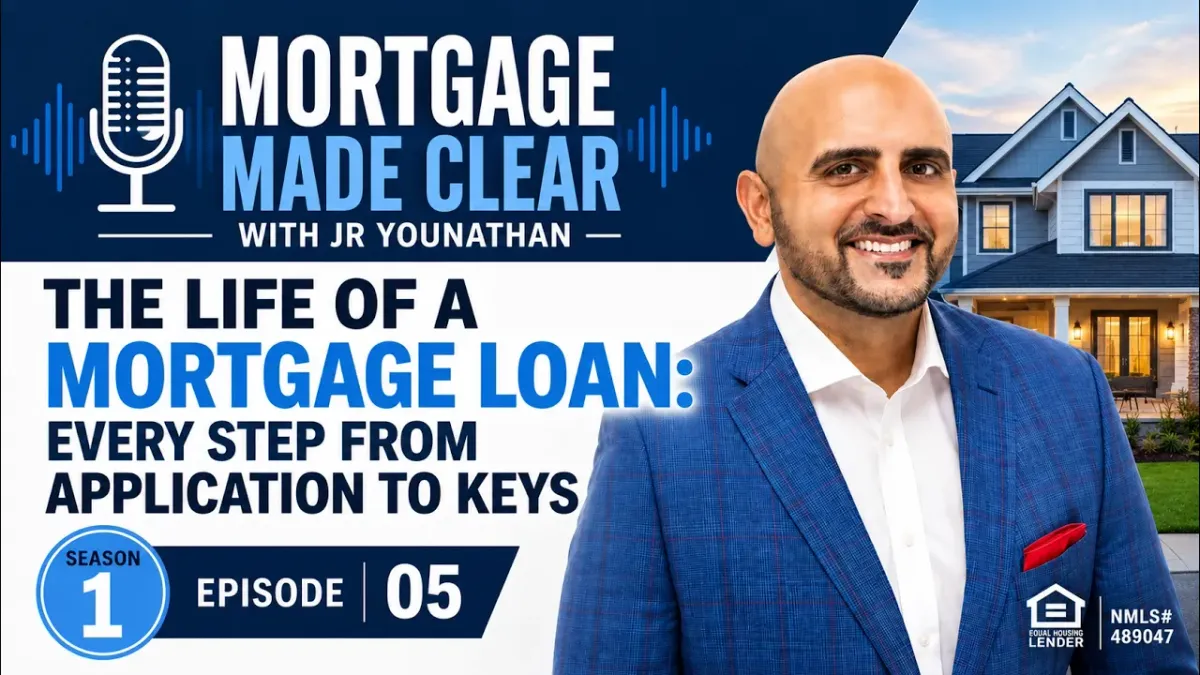
The Life of a Mortgage Loan: What Happens From Application to Closing Day
If you've never been through the mortgage process, it can feel like your loan disappears into a black box after you apply. Even if you've bought a home before, you may have signed a stack of documents without ever knowing who was working on your file or why they kept asking for more paperwork.
Let's fix that. Here's the full life of a loan, step by step, including the people behind each stage and what you can do to keep things moving smoothly.
Step 1: The Application
By the time you apply, you and your loan originator have usually already talked through your goals, whether that's buying a home, refinancing, or something else.
Applications used to be handwritten on carbon-copy forms. Today, you can apply over the phone with your loan officer or on your own from your phone or computer. Modern application platforms, called point-of-sale systems, can do a lot more than collect your information. Many can run credit, price your loan, and even verify your income and assets electronically through your payroll provider and bank. That means far fewer documents for you to dig up and upload.
There are exceptions. If your employer still writes paper checks, or if you're self-employed, expect to upload more documentation yourself.
Tip: If you're completing the application on your own, take your time and be thorough. Every detail you get right up front saves you document requests later.
Step 2: Loan Originator Review
Once you submit, your application comes to your loan originator for review. Unless it's a very straightforward file, a good loan officer will reach out to go over it with you and position it for success.
I like to write a summary for the underwriter explaining exactly what's going on in the file. That matters most when a borrower has multiple income sources or assets spread across several accounts. I never want an underwriter guessing.
Some loan officers, including me, work with an assistant who helps gather documents and may contact you directly. Their job is to make sure your file is in excellent shape before it moves forward.
Step 3: Processing
Next, your file goes to a processor. The processor reviews everything again, organizes the documentation, and makes sure the underwriter will have a clear picture of your loan. Yes, we double- and triple-check. That's the point.
Some lenders send files straight from the loan originator to underwriting, and many use a hybrid approach. Either way, the goal is the same: when your approval comes through, it should be one you can count on.
Step 4: Underwriting
An underwriter's job is to help make the loan work while assessing its risk. A big part of that is the ability-to-repay rule, which requires lenders to confirm you can reasonably afford your loan. Nobody wins if a homeowner ends up in a payment they can't sustain.
I evaluate every loan through a framework I call ERIC: Equity, Reserves, Income, and Credit. Some people call these the "C's of credit," but ERIC is how I think about the core tenets that make a loan viable. (I'll cover ERIC in depth in a future episode.)
Step 5: Conditional Approval
Most loans come back from underwriting with a conditional approval. It's an approval with a list of items that still need to be satisfied.
Those conditions go back to the processor, who shares them with you or the loan officer's assistant. Some items require documents from you. Others are things the lender gathers on its own, such as:
The appraisal, which confirms the property's value
Title work, which confirms clear title and identifies any existing liens or judgments that need to be paid off, so your new loan holds first lien position
We work quickly to collect everything, explain anything that needs explaining, and resubmit to the underwriter for final approval.
Step 6: Closing and Your Disclosures
After final approval, your file makes a quick stop with the processor and then moves to a closer. The closer prepares your final documents while working with escrow, title, or an attorney, depending on your state.
There are two key disclosures to understand:
Loan Estimate: You receive this within three days of applying. If something changes during the process, like the appraisal value, a renegotiated purchase price, or locking your rate midway through, you'll receive an updated Loan Estimate. It's normal to get several.
Closing Disclosure: This is nearly identical in format to the Loan Estimate, but it shows your final numbers. You must receive it at least three days before you sign your loan documents.
Most disclosures can be e-signed through the same portal you applied in. Whenever you get a notice about a new disclosure, log in and review it. If something changed that you don't understand or don't like, call your loan officer.
Even better, a good loan officer will call you first. When a client's Closing Disclosure goes out, I offer to walk through it on a screen share so they understand every line: closing costs, third-party fees, title and escrow fees, and impounds. (A full Loan Estimate and Closing Disclosure breakdown episode is coming.)
Step 7: Signing
California uses a hybrid signing process. You can e-sign your non-notarized documents, and a notary handles the rest. That might be a mobile notary who comes to your home, a signing at the escrow office, or a meeting at another location. Escrow typically arranges the notary.
Step 8: Right of Rescission (For Some Loans)
Certain loans, such as many refinances on a primary residence, come with a right of rescission. It's a three-day cooling-off period where you can decide whether to move forward. Purchases, second homes, and investment properties don't have one, so those loans can close right away.
Step 9: Funding and Recording
Once your signed documents are back and everyone agrees the loan is ready, the loan funds. Often the lender has already wired the money to escrow, which is holding it until it gets the green light. This is known as table funding.
Escrow then disburses funds to all parties and sends your deed of trust to the county for recording. The deed of trust is the security instrument that ties your promissory note to the property. Once it records, the transaction is officially complete, and escrow can release keys or access to the property.
Step 10: Post-Closing and Servicing
Within a week or two, your loan is set up on the lender's servicing system. You'll receive information by mail or email and can log into a servicing portal to view your loan.
If you didn't set up automatic payments at closing, you can usually do it online. One tip from my own experience with servicers: getting someone on the phone can be tough, but the secure messaging system in the servicing portal is often the fastest way to get answers.
The Bottom Line
Technology and AI have made the mortgage process far more efficient, but real people are still moving your loan from one stage to the next: your loan originator, assistant, processor, underwriter, closer, and escrow team.
I like to think of myself as your pilot. My job is to get you to your destination safely with as little turbulence as possible. Most flights are smooth, but even when there's a bump or two, the goal is to get you on the ground so you can unbuckle your seatbelt and enjoy your new home.
Have questions about where your loan is in the process? Reach out anytime.
Click here to learn about our privacy practices, including those required under state law such as the California Consumer Privacy Act.
PLEASE NOTE: The information contained in this e-mail message, including attachments, may contain privileged or confidential information that is intended to be delivered only to the person identified above. If you are not the intended recipient, or the person responsible for delivering this message to the intended recipient, you are hereby notified that any retention dissemination, or copying of this communication is strictly prohibited. If you have received this communication in error, please notify Sunflower Bank by replying to the message, not reading the message or its attachments, and deleting the message and any attachments from your computer without copying or sending them to anyone else. While all reasonable efforts have been taken to ensure that this email and its attachments are virus free, Sunflower Bank cannot accept any liability and it is recommended that the recipient scan all messages and attachments for viruses and other malicious data.

Mortgage Calculator
See your total mortgage payments using the tool below.
| Year | Interest | Principal | Balance |
|---|

Contact Us
(909) 576-0550
3990 Concours Street, Ste 310 Ontario, California 91764
JR Younathan, N.A. is committed to providing a website that is accessible to the widest possible audience, in accordance with applicable standards and guidelines. We are actively working to increase accessibility and usability of our website to everyone, including individuals with disabilities.
Our website endeavors to comply with the Web Content Accessibility Guidelines (WCAG) 2.1 Level AA standards. If you have difficulty accessing any part of our website, or have suggestions for improvement, please call us at (909) 576-0550.
We will work with you to provide the information you need in an accessible format.
We welcome your feedback and are committed to continually improving our website's accessibility.
